
Impact Report 2025-26
This report highlights the difference our work is making for infants, children and young people, volunteers and Scotland’s children’s hearings system.
Contents
Foreword
By Elliot Jackson, National Convener and Chief Executive Officer
Every day across Scotland, Panel Members make decisions at children’s hearings that help keep infants, children and young people loved, safe and respected. Behind every one of those decisions is a remarkable community of volunteers, colleagues, partner organisations and people with lived experience who share a commitment to ensuring that children’s rights and voices are at the heart of everything we do. This report shows the impact of that collective effort during our latest full year, 2025-26.
Throughout the year, we continued our work to improve the experiences of children and young people in hearings, deepen the participation of people with lived experience, strengthen the skills and wellbeing of our volunteer community, and help shape the future of Scotland’s unique Children’s Hearings System. This report captures those achievements and the difference they make in the lives of the infancts, children, young people and families we serve.
You will read about young people with lived experience influencing our work at every level, from recruitment and policy development to quality assurance and children’s rights reporting. You will see how children’s voices have shaped improvements to hearing practice, including the successful national rollout of ‘Chair Greeting the Child’, helping children feel more comfortable, respected and able to participate even before their hearing starts.
The impact described in these pages is only possible because of the extraordinary people who make up our community. Our Panel Members continue to make difficult and important decisions with compassion, skill and integrity. Our Panel Practice Advisers strengthen quality through observation, support and learning. Our colleagues provide the leadership, guidance and expertise that enable the system to operate effectively. Together, they embody the values that define Children’s Hearings Scotland.
Our work in 2025-26 demonstrated the power of listening and learning. We acted on feedback, improved how we support people and continued to invest in quality across the organisation. This is part of our continuous organisational improvement and our work to support a stronger, more confident and more connected community that is always equipped to deliver the best possible outcomes for those who depend on the hearings system as it evolves.
We have continued to prepare for the future. As hearings redesign progresses, CHS has played a leading role in influencing change while supporting our volunteers and ensuring that the interests of children and young people remain central. Transformation must ultimately be judged by whether it improves experiences and outcomes for children.
This report is a story of children’s rights being championed, of lived experience shaping decisions, and of volunteers being supported, recognised and empowered. Above all, it is a story of people across Scotland working together to create a better hearings system and a better future for children and young people.
To everyone who has contributed to that story during 2025-26, thank you. Your commitment, compassion and determination continue to make a lasting difference, and I am proud to share the impact you have achieved.
Introduction
By Expert by Experience, Liam Slaven
When Children’s Hearings Scotland established the Experts by Experience group in April 2025, it was with a simple belief: those who have experienced the hearings system are best placed to help shape its future.
I started working with CHS over 10 years ago as a lived experience adviser, when the Experts group was just an aspiration. Now it is an established reality, and over the past year my fellow Experts and I have demonstrated the power of lived experience in action. I am so pleased to have been asked to write this introduction reflecting on the impact of our work.
As detailed in this report, since we were formed, we have contributed to more than 30 internal workstreams and several national pieces of work. We have helped shape CHS’s approach to children’s rights, informed volunteer recruitment, contributed to guidance and quality assurance processes, delivered workshops to Panel Members and had the opportunity to engage directly with decision makers, including those at the highest levels of Government. Most importantly, we have brought the voices and experiences of children and young people into conversations where they may previously have been missing.
I am particularly proud that our involvement has gone beyond simply being consulted. We have been trusted to challenge thinking, ask difficult questions and help identify where improvements are needed. Whether discussing participation in hearings, children’s rights, homelessness, language, or the experiences of young people leaving care, we have been able to influence real change. That demonstrates the value of lived experience and the difference it can make when organisations commit to genuine participation and co-design.
This report demonstrates that meaningful participation is no longer an aspiration; it is something we are delivering together.
The impacts highlighted in these pages show the difference that young people can make when they are trusted as partners, valued for their expertise and provided with genuine opportunities to influence change.
This is only the beginning. My hope is that the voices of children and young people become even more embedded across CHS and the wider hearings system. I hope future Experts by Experience continue to have opportunities not only to share their experiences but to lead change, shape policy and influence decisions at every level. I hope that every child who comes into contact with the hearings system feels respected, listened to and empowered to participate in decisions about their own life.
I also hope that the work of Experts by Experience inspires other organisations to recognise that lived experience is not something to be consulted occasionally, but an essential form of expertise that strengthens services, improves outcomes and creates lasting change.
To my fellow Experts by Experience, thank you for your honesty, courage and commitment. Every conversation, challenge and contribution has helped move us closer to a system that better reflects the rights, needs and experiences of babies, infants, children and young people. I am excited to see what we can achieve together in the years ahead.

Focus on: Infants, Children and Young People
Evidencing our progress on children's rights
The UNCRC Incorporation (Scotland) Act 2024 embedded children’s rights into law, and 2025- 26 was our first full year since the Act was implemented.
The legislation confers a duty on public bodies including CHS to report each year on evidence of ‘progressing children’s rights’. So activity to gather that evidence within the year produced the direct impact of delivering our first annual Progressing Children’s Rights Report.
We used a variety of methods to gather information and supported people across the organisation to think critically about their children’s rights practice. This included:
creative engagement with our Experts by Experience, a participation group of 10 young people aged 14 to 25 who have lived experience of hearings. This work supported them to learn about the Progressing Children’s Rights report and complete report cards for the organisation’s workstreams based on the four general principles of the UNCRC
using the Improvement Service’s UNCRC Implementation Framework to gather evidence from staff teams across the organisation
awareness-raising activity with staff focusing on adopting a children’s rights approach and our reporting duties
engaging with the CHS volunteer community (including Panel Members and Panel Practice Advisers) through our Practice and Policy Bank to gather their insights about how children’s rights guide
their decision-making
delivering a session on progressing children’s rights with our bank of Independent Report Writers.
Experts highlight volunteers’ role in upholding right to a safe home
A child’s right to access a safe home is at the heart of decisions that Panel Members make when considering whether to impose measures stipulating where a child will live.
Our Experts by Experience were influential in highlighting this, through their involvement in the recruitment of Panel Members. For the autumn 2025 volunteer recruitment campaign, Experts asked candidates to consider the impact of homelessness on children, during the interview.
This highlighted the right to a safe home as an issue affecting children in the hearings system, and interviewee feedback revealed strong appreciation for having Experts involved.
“Nice to see young people at the centre. It was clear it was their own words and very authentic. Liked that they were involved at this stage.”
Interviewee feedback
Participation
Experts by Experience
CHS has a commitment to shaping our work in response to the voice of lived experience. As part of this commitment, our Experts by Experience, a participation group of 10 young people aged 14 to 25 who have lived experience of hearings, was established in April 2025.
Based across Scotland, the Experts regularly come together to influence the work of CHS, and in their first year they have shaped 31 internal and five external workstreams.
Influence at the highest level
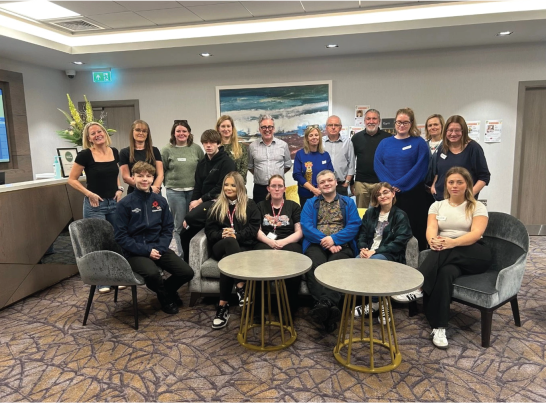
Early after they were appointed, Experts visited the Scottish Parliament alongside members of Our Hearings Our Voice, to meet the Minister for Children, Young People and the Promise. This was an opportunity for them to learn how Parliament operates and share their views and experiences at the highest level of influence.
Their impact includes having worked with the CHS Quality team during Quality Week 2025.
The Experts co-produced a page within the Panel Practice Advisor Guidance. This ensures that areas identified by young people, such as language and children’s participation in hearings, are at the forefront of how hearings are observed.
“Being in Experts by Experience gives me an opportunity to provide input, influence and have a sense of involvement in the system I was once stuck in with the feeling of no control.”
Ryden
Their impact includes having worked with the CHS Quality team during Quality Week 2025.
The Experts co-produced a page within the Panel Practice Advisor Guidance. This ensures that areas identified by young people, such as language and children’s participation in hearings, are at the forefront of how hearings are observed.
In September 2025 our Experts by Experience delivered a workshop to Panel Members in Highland and Moray. The following reflections provided by a volunteer show their impact:
“The city chambers were buzzing with discussion and lively debate. Paper shuffled, pens scribbled, post-its filled up with ideas.
Volunteers from across Highland and Moray paused over their notes, reflecting on what participation in hearings really meant.
Participation is more than attendance — it involves choice: to draw, to write, to record, or to ask someone to speak for you.
Around the room, heads began to nod. Pens moved again, and more post-its flew. The shift was almost audible — the quiet moment of ‘I get it now’.”
Participation values lead to remuneration for Experts
Our Children’s Participation and Rights Strategy has four aims: respect, inclusion, empowerment and accountability. The first of those led the Board to support the move to align remuneration of our Experts by Experience with Scottish Government guidance, providing equity and respect for their time and input.
“I absolutely love doing it and would do it for nothing, but it does have impact and I sometimes have to take time off work. If this needs to be as unpaid time off, the payments mean I can still take part without any detriment.”
Liam
Wider participation impact
CHS established its internal Participation and Feedback Delivery Group, whose membership comprises an Expert by Experience plus colleagues who all have a role working or communicating directly with children and young people. The group will be accountable for the upscaling of existing participation workstreams to support children and young people to tell us what they think about hearings. In 2025-26 the Delivery Group expanded those regional participation workstreams to five of our nine regions. This work was included as a good practice case study of the 2026 State of Children’s Rights Report (page 135) by Together Scottish Alliance for Children’s Rights.
Chair Greeting the Child
Panel Members across Scotland adopted a welcoming ‘soft start’ to children’s hearings by greeting the child in the waiting room and introducing themselves before the hearing.
This small change was conceived and driven by young people in Moray. After a two-year pilot, the ‘Chair Greeting the Child’ practice was then rolled out across all nine regions between March and November 2025.
Chair Greeting the Child has been successful in putting children and young people at ease before their hearings. Being able to meet and say hello to the Chair of their hearing in advance means that children are no longer walking into a hearing room to be met by three strangers, which children have told us can cause anxiety.
Our partners in social work and advocacy have shared a wealth of feedback from their own experiences in hearings as well as direct feedback from children and young people they’ve supported to attend hearings.
89% of advocacy providers who responded to a feedback survey saw positives from the Chair Greeting the Child project, while 72% of social workers who responded said it was making the start of hearings more child friendly.
The following comments are from advocacy workers and social workers.
“It was good for the young person to see the panel Chair before the hearing started. They were very friendly and it helped put the young person at ease. After the hearing they shared that they liked the Chair.”
“The child has felt that the chair is more of just a ‘normal person’ rather than someone more intimidating who just makes decisions”
“The young person voiced that there was one less stranger in the room. He could engage, even if for a bit, outside of the legal structure of the hearing.”
“She expressed the hearing wasn’t scary and they were very nice, and they made her feel relaxed by speaking to her before the panel.”
“This Chair greeted the young person then explained a bit more about the hearing. This helped reinforce the young person’s understanding of different options they had while the hearing was going on, such as speaking to the panel by herself.”
Using feedback and complaints to improve practice
Complaints and feedback provide essential insights into how we can deliver the best possible experience in the hearing room for children and young people. Analysis of themes and trends ensures we can provide support for individual Panel Members and feed into wider practice and policy.
Recent examples include insights on the importance of good hearing management to ensure all parties feel heard and respected, and the importance of child-friendly communication.
Feedback was shared directly with Panel Members. Feedback and trends were also shared with the Practice and Policy team and are being used to update the Practice and Procedure Manual for volunteers, strengthening the guidance and support we offer our volunteers.
New guidance on meeting the needs of both older children and the very young
In 2025-26 CHS issued two Practice Guides for volunteers, to support them to make decisions for children at both ends of the age range – the youngest and oldest children in the hearings system.
Responding to the Needs of Older Children
Responding to the Needs of Older Children was drafted by the Children and Young People’s Centre for Justice (CYCJ) in partnership with CHS. It was introduced in anticipation of the Children (Care and Justice) (Scotland) Act 2024 coming into full effect, which will mean the hearings system will embrace all 16- and 17-year-olds for the first time (due in summer 2027).
CHS consulted with Panel Members to discuss concerns around these changes and to determine where further training and resources could be provided. The topics covered were determined using information from the Panel Community as to what they want to learn more about, as well as information from experts in the field on what issues most often affect older children in the hearings system.
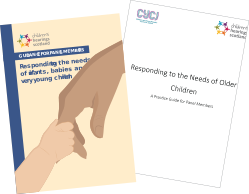
Responding to the Needs of Infants, Babies and Very Young Children
Later in the year, the Practice Guide Responding to the Needs of Infants, Babies and Very Young Children was also shared with volunteers. Publication of the Guide followed a collaboration with the Centre for Excellence for Children’s Care and Protection (CELCIS), as well as NHS Infant Mental Health Teams across Scotland.
The Guide gives Panel Members more support to listen to and understand the ‘quieter voices’ involved in hearings, a requirement highlighted in the Promise Report. It covers key areas for Panel Members to consider for hearings involving children aged 0-3 years, who are the largest group of children referred to hearings due to lack of parental support.
Both of these new guides have fed into the subsequent development of the new ‘Minimising Barriers’ section of the updated Practice and Procedure Manual. We will also incorporate key messages from the guides into future developments of Pre-Service training.
To date, ‘Responding to the Needs of Older Children’ has been viewed online or downloaded nearly 300 times, and ‘Responding to the Needs of Infants, Babies and Very Young Children’ nearly 250 times.
"It provided an in-depth understanding from a baby’s/very young person’s perspective and reminded me that although they can’t verbalise how they feel there are other ways of finding that out. Another reminder of how complex a child’s life can be."
Panel Member
"[The guidance provides] a greater awareness that, as the child is often excused, it is vital within the hearing to always keep them at the centre rather than, as can be the case, the needs of the parents who are present."
Strengthening Quality Across Hearings
The quality assurance provided by our volunteer Panel Practice Advisers throughout the year delivers a core impact of our work. Our PPAs play a key role in quality assurance, providing valuable perspectives on hearing practice and supporting Panel Members to build confidence and capability in their role.
Throughout 2025-26, we continued to embed the Quality Strategy by strengthening the ways we gather, share and use evidence relating to quality across CHS. Through engagement with volunteers, National Team colleagues and Experts by Experience, we continued to build understanding of quality and involve our people directly in shaping change.
Achievements in 2025-26
2,496 observations were conducted by PPAs across our nine regions.
1,493 individual Panel Members were observed, providing valuable insight into hearings practice and opportunities to recognise effective practice and share learning.
114 Lead PPAs and PPAs were involved in observations across Scotland.
28 Panel Members from nine local authority areas participated in Quality Conversations, helping to shape improvements to the observation process.
10 Experts by Experience contributed to work on language and attendance at hearings, directly informing updates to PPA Observation Practice Guidance.
Resources were created in collaboration with PPAs to help strengthen understanding of the PPA role and its contributions to hearings quality.
Our Quality team also attended staff and volunteer meetings, gathering feedback and strengthening local on-the-ground connections.
Together, these activities strengthened people’s understanding of hearing practice, informed development of guidance and processes, and increased opportunities for volunteers, colleagues and Experts by Experience to contribute to quality developments.

Focus on: Volunteers
Recruitment
The recruitment of volunteers to serve at hearings and to support quality assurance is among the most impactful activities we perform every year.
In the build-up to the autumn 2025 volunteer recruitment campaign, we gathered feedback to help us reduce peak demands on volunteers and local authority clerks during the selection process.
We also introduced new online National Information Sessions in the lead up to and during the recruitment phase rather than holding local in-person sessions. This enabled us to reach more people and helped us manage expectations around the commitment required of volunteers. It also enabled a higher number of questions to be answered directly and individually. More than 400 people attended the online information sessions.
In most areas, the National Team shortlisted applicants for interview, reducing the burden on volunteers who previously carried out this task.
Young people involvement in recruitment
Our Experts by Experience, alongside young people from Our Hearings Our Voice, reviewed interview questions and filmed a question of their own that was put to all interview candidates: they asked for their response to the statement ‘Homelessness impacts on the wellbeing of children and families.’
At the close of the successful recruitment campaign, 580 applications had been received. In-person induction sessions were held in the late autumn to help build relationships.
In November 2025, 269 candidates progressed to become trainees, and just after the end of the 2025-26 year, 184 new Panel Members were appointed.
Panel Practice Adviser Recruitment
In January 2026 CHS ran a dedicated recruitment campaign for volunteer Panel Practice Advisers, to strengthen our quality-assurance capacity.
This focused approach resulted in 41 new PPAs being appointed, which is the highest number appointed in a single cohort.
A new Welcome Booklet was produced for PPAs, and all PPAs took the Introduction to Hearings and Quality Assurance courses as part of their training.

Improving Hearing Information Packs
Panel Members had fed back in 2024 that Hearing Information Packs (HIPs) contained too much duplicated material and their length could make it hard to prepare for hearings. In response, CHS worked with Scottish Children’s Reporter Administration (SCRA) to improve the HIP, starting with reducing its size.
The first phase of this project involved replacing the lengthy Records of Proceedings (which often contained long historical records, blank pages or large gaps) with a concise Chronology of Decisions and Reasons. This allows a child’s journey to be reviewed in one clear document without containing historical details which children can find re-traumatising.
While SCRA worked with children and young people to ensure the new Chronology met their needs, CHS worked with Panel Engagement Leads to make sure that the new Chronology fulfilled its primary purpose: ensuring that high-quality decisions can be made for children and their families.
The new concise Chronology went live in March 2026 and additional feedback has since been gathered, which will feed into a review six months after implementation.
The quotes below were gathered during a SCRA consultation on the new format with care-experienced children and young people.
“New format is so much better and less overwhelming.”
“Reduced size of papers is positive; previous versions were too long and often unopened as too daunting to even open.”
“Removing professionals’ names from old Record of Proceedings prevents triggering memories.”
Learning
Preservice training and Chairing with Confidence
The Learning Team helped CHS boost the number of Panel Members able to chair hearings in 2025- 26. Key to this was bringing forward the point in a new Panel Member’s service when they are ready to chair. Previously it was typical for a new Panel Member to serve for six months, then attend Enhanced Practice training, serve a further six months and finally complete Management of Hearings training, becoming Chair qualified one year into their volunteering at the earliest.
Since the beginning of 2025, Pre-Service training has included as standard all the learning required to become Chair qualified, which has significantly boosted the number of chairing-ready Panel Members in the volunteer community.
In addition, existing Panel Members who needed support to step into the chairing role were encouraged to take the Chairing with Confidence learning course. Chairing with Confidence is a full day course, focusing on the procedural responsibilities of the Chair, delivering robust decisions and reasons, and the need for clear and simple language in hearings. Reflecting on practice and learning from each other are integral elements to developing as Panel Members and the course spends valuable time sharing real experiences of hearings to ground the theory in practice. Feedback from the course was positive and it will continue to be offered across Scotland.
"This was definitely well worth going to and has given me increased confidence to step up the Chair position. There is no way I would have been ready to do this without this course."
Trauma training
All staff and volunteers completed a two-year programme of mandatory trauma training in 2025-26 using resources from the Scottish Government-led National Trauma Training Programme. The first trauma-informed course that staff and volunteers completed, in 2024, ensured we all developed a baseline knowledge of what trauma is and what it means to be trauma informed. The second Trauma Skilled courses, which staff and volunteers completed in 2025-26, provided the skills to increase our understanding of what psychological trauma is, how it can affect the people we work with, and how people can be supported to recover. This module also focused on the impact of trauma on children and young people, understanding how children and young people recover from trauma and how to meet the needs of children and young people who have experienced trauma.

Strengthening wellbeing support through listening to volunteers
As part of our commitment to creating a supportive volunteer experience, during 2025- 26 we introduced structured self-evaluation and wellbeing check-ins for newly appointed Panel Members. This created new opportunities for volunteers to reflect on their experiences, share feedback and access support during their first year of service.
Over the two cohorts of new Panel Members who entered service in 2025-26, around 60% took part in this process. Through hundreds of self-evaluations and wellbeing conversations, volunteers shared what was helping them thrive, what challenges they were facing, and how CHS could better support them.
“The check-ins are helpful, even though I wouldn’t usually be someone who asks for support.”
New Panel Member, 2025 cohort
Reflections from volunteers
The check-ins were designed to allow volunteers not only to reflect on their experiences, but also to connect with peers, and access support from their Wellbeing Coordinator if they needed it. They enabled volunteers to pause, build resilience by identifying what has gone well, and foster a sense of personal progress and growth over time.
An important benefit from these sessions was the feedback that helped us to better evaluate our training and wider support for volunteers.
Local support
We heard how volunteers increasingly feel confident in their role and value the support available to them. Many highlighted the importance of peer support, opportunities to observe experienced Panel Members, learning and development opportunities, and wellbeing conversations.
Volunteers also described feeling reassured by support from colleagues, buddies, Panel Engagement Leads and Wellbeing Coordinators.
CHS volunteers have always supported each other informally through skill-sharing and friendly conversations between hearings. Since the introduction of the new Tribunal Support Model, volunteers have had additional support provided by their Area Support Teams and CHS National Team.
Experienced volunteers continue to play a role in helping new Panel Members develop and grow, including as they gain experience at chairing hearings.

CHS responding to feedback
Importantly, through these check-ins, volunteers also told us where improvements were needed for them to feel more confident, capable and connected at CHS. New Panel Members wanted a better understanding of the realities of hearings, clearer expectations, more opportunities to observe hearings, stronger digital support, and greater connection with the wider Panel Community. Some also highlighted challenges around hearing scheduling and navigating the practical realities of the role.
We responded to this feedback by making changes across recruitment, learning, induction and wellbeing support, which in 2025-26 included:
introducing hearing observations earlier in the volunteer journey
refreshing and strengthening Pre-Service training to better reflect the complexity of hearings
strengthened proactive wellbeing support through check-ins, debriefs and tailored support for volunteers
improving digital guidance and support by providing devices and support in-person at welcome events
enhancing our process to seek learning support needs and our reasonable adjustment processes for trainees
Personalised support
The feedback has also helped us provide more personalised support to volunteers. Through wellbeing conversations, individual volunteers have been connected to learning opportunities, local events, peer support and tailored guidance to help them develop confidence and continue volunteering well.
By listening to volunteers and acting on what they tell us, we are strengthening both volunteer wellbeing and their overall experience of volunteering at CHS, including volunteers’ sense of being valued. We hope this forms part of an improving volunteer journey with reduced burnout and higher retention rates.
“It still feels early in my journey, but I feel equipped and supported.”
“The debrief after a difficult hearing and the follow-up check-in made a real difference.”
“I was apprehensive in preparing for my first hearing sessions, but the training equipped me well. I was well supported by my fellow Panel Members and felt confident in the hearing room.”
Strengthening partnerships through knowledge exchange
Panel Members and Social Workers came together in Glasgow for a pilot knowledge exchange programme that received highly positive feedback from participants.
Three sessions were held for groups of around five Panel Members and five social workers each time, with the aim of strengthening understanding of each other’s roles, experiences and perspectives at hearings. The programme, which is in line with the Promise’s aim of ‘supporting the workforce’, was a response to feedback from both groups, which was refined through a needs analysis survey to identify topics for discussion.
Nearly 90% described the quality of the discussion as excellent and more than 70% said the pilot will significantly improve children’s and families’ experiences within hearings. Participants said the sessions created an open environment where both sides could speak honestly, challenge assumptions and dismantle the sense of ‘us versus them’, with the experience described as reassuring, confidence-building and professionally validating.
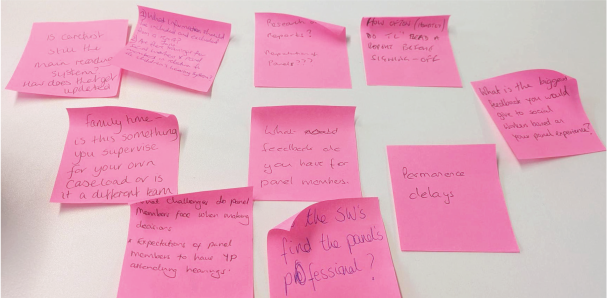
‘“Insight into the workload of social work should be mandatory training for Panel Members. so important to understand the depth of social work involvement with children and families. Helps enhance confidence in and gain further respect for their views and recommendations.”
Panel Member
“Useful being able to share my experiences but also to hear what Panel Members need to hear/read to justify decisions.”
social worker
The model will be expanded across the Glasgow region, with monthly sessions planned that will enable many more Panel Members and Social Workers to benefit. There will also be opportunities to include Panel Practice Advisers.
The pilot delivered proposals for future training, including for social workers on writing reports, and for Panel Members on strategies for managing the dynamics created by legal representatives in hearings, maintaining a child‑focused approach, and ensuring clarity of professional roles.
Community Hub
In response to a growing need for cohesion of communication platforms and sources of essential information, in November 2025 the Communications and Engagement team delivered a transformed Community Hub: a SharePoint-based central space for resources and services for volunteers.
While there is no ‘correct’ way for volunteers to access their digital channels and platforms, the update puts them all in one place for the first time.
The main Hub also has links to additional SharePoint-based resources and services provided by CHS.
The Community Hub has around 500 unique users a day during the working week.

“The new layout is very easy to navigate. I like the fresh look, too.”
“Clear and concise. User friendly.”
Town Hall Webinars
In 2025 we hosted two Town Hall webinars: large-scale online meetings open to all volunteers across Scotland, where we share important information and invite questions, often with external guests answering those questions on our expert panel.
Legislative changes affecting children’s hearings
In May we addressed recent and upcoming changes to the hearings system resulting from changes in legislation: the Children (Care and Justice) (Scotland) Act 2024, the UNCRC (Incorporation) (Scotland) Act, the change to the age of criminal responsibility, and legislation that would deliver hearings redesign and was still in draft, commonly referred to at the time as the ‘Promise Bill’.
The discussion was chaired by a Panel Member and the expert panel comprised our Practice and Standards Manager, our Practice and Policy Advisor and a Tribunal Delivery Manager, all of whom know the legislative landscape well. More than 230 people attended the one-hour webinar, with more than 20 questions asked and answered, and the feedback was overwhelmingly positive.
‘Hearing the smallest voices’
Our December 2025 webinar featured Dr Helen Whincup, Senior Lecturer at the University of Stirling, who discussed her award-winning longitudinal study about the issue of permanence, which followed the lives of nearly 2,000 children in the care system for more than a decade. It also featured a Lead Panel Practice Adviser and our Policy Team Manager, and the event coincided with the launch of our new guidance for volunteers ‘Responding to the needs of infants, babies and very young children’.
It was attended by more than 180 volunteers and again a good range of questions were put to our panel and answered, and feedback was overall very positive.

Recognising the contributions made by volunteers
Each year, CHS’s Regional Teams host events to recognise and celebrate the commitment and work of volunteers across Scotland. During 2025- 26, recognition events took place across all nine CHS regions. Volunteers from all backgrounds came together to meet, mingle and celebrate their service milestones.
Three volunteers reached exceptional milestones in 2025-26. Gordon Wyness from Highland and Stephen Phillips from West Dunbartonshire celebrated 45 years of service, while Ian Hart from East Dunbartonshire marked an extraordinary 50 years, becoming the first Panel Member to do so.
King’s Garden Party
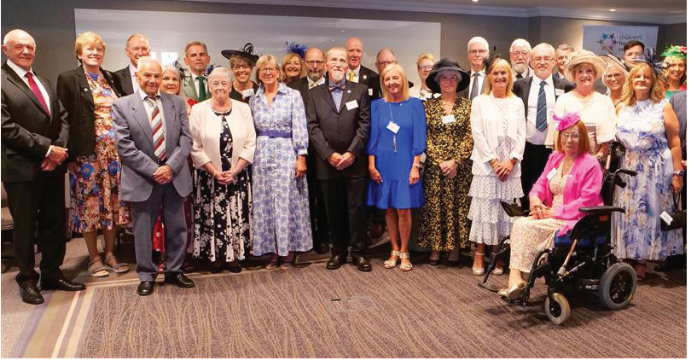
In July 2025, 38 current and former volunteers from across all nine CHS regions attended the King’s Garden Party at the Palace of Holyroodhouse. They were nominated in recognition of their services to infants, children and young people.
The King’s Garden Party is also an opportunity to raise public awareness of the important work our volunteers do across the country. We were delighted to receive coverage in at least eight newspapers and their websites across Scotland.
“I hope it demonstrates that our quiet, often hidden and very sensitive volunteer work and all the many training hours volunteers put in is valued and recognised.”
Lorna MacAulay, Panel Member, Eilean Siar
Focus on: Hearings Redesign
Informing legislative change, and preparing volunteers
CHS played an important role in the development of the Children (Care, Care Experience and Services Planning) (Scotland) Bill. During 2025-26 the legislation was introduced to Parliament and completed the three formal stages of scrutiny and amendment by MSPs, ensuring it would subsequently (in May 2026) be enacted by Royal Assent.
During the final year of the Bill’s journey, CHS:
provided a response to the Scottish Government’s ‘call for views’
provided written evidence to the Education, Children and Young People Committee
gave evidence in person to the Education, Children and Young People Committee

Meanwhile our involvement in the non-legislative space continued, through the Hearings Redesign Board, ensuring alignment with partners across the children’s care and justice sector as we prepare for the implementation of the Act. We also progressed priorities of our own, such as ‘Chair Greeting The Child’.
A new learning model to support our vision for the future
In 2025-26, we brought learning in-house and reshaped the Learning Team so that we can create a more inclusive and adaptable learning experience for Panel Members. This change will also offer greater flexibility so that we can respond to the upcoming changes to the Children’s Hearings System and build our digital learning provision.
Governance
Throughout the year, the Governance Team delivered improvements to our policies and processes ensuring compliance with Scottish Government requirements for Non-Departmental Government Bodies.
This included improving the quality and scheduling of information provided to our Board to evidence that we are operating not only in line with statutory responsibilities and strategic objectives, but also in line with good governance principles: accountability, transparency, integrity, risk management, efficiency and continuous improvement.
Thematic summary
Learning from lived experience
A defining feature of 2025-26 has been the increased influence of young people across our work. Lived experience has become more visible and influential throughout CHS. The establishment and growth of our Experts by Experience team demonstrate our commitment to ensuring that young people are active partners in shaping the future of CHS and the wider hearings system.
Investing in quality
Across the year, CHS continued to build a stronger focus on quality. Through proactive steps we had our biggest single intake of Panel Practice Advisers. Our PPAs’ dedication, enhancements to guidance and training, and our increasing use of evidence and feedback all contributed to a strengthening of our quality-assurance capacity and capabilties.
Valuing our people
The achievements detailed in this report have been made possible by the commitment, expertise and compassion of our volunteers and colleagues. Throughout 2025-26, we invested in recruitment, learning, wellbeing and recognition and continued to build a culture where people feel valued and empowered.
Strengthening partnerships
Successful change depends on collaboration. Throughout the year, CHS worked with partner organisations including Our Hearings Our Voice, the Scottish Government, SCRA, local authorities, advocacy organisations, academics and others to enhance the volunteer experience, improve hearings for participants and ensure change puts children’s rights and interests first. These relationships entail knowledge sharing and collective problem-solving, and the progress highlighted by this report shows not only the strength of CHS, but also the strength of partnerships that support our shared ambition for Scotland’s children.
Building for the future
2025-26 was a year of both delivery and preparation. CHS continued to play a key role in shaping the future of the Children’s Hearings System. Legislative change and wider hearings redesign present opportunities to strengthen how we uphold children’s rights and improve outcomes. We are not waiting for change to happen: with input from young people and our volunteers we are helping to shape it. As we move forward, we do so with confidence, guided by evidence, informed by lived experience and supported by a dedicated volunteer community committed to delivering the best possible outcomes for infants, children and young people.
